
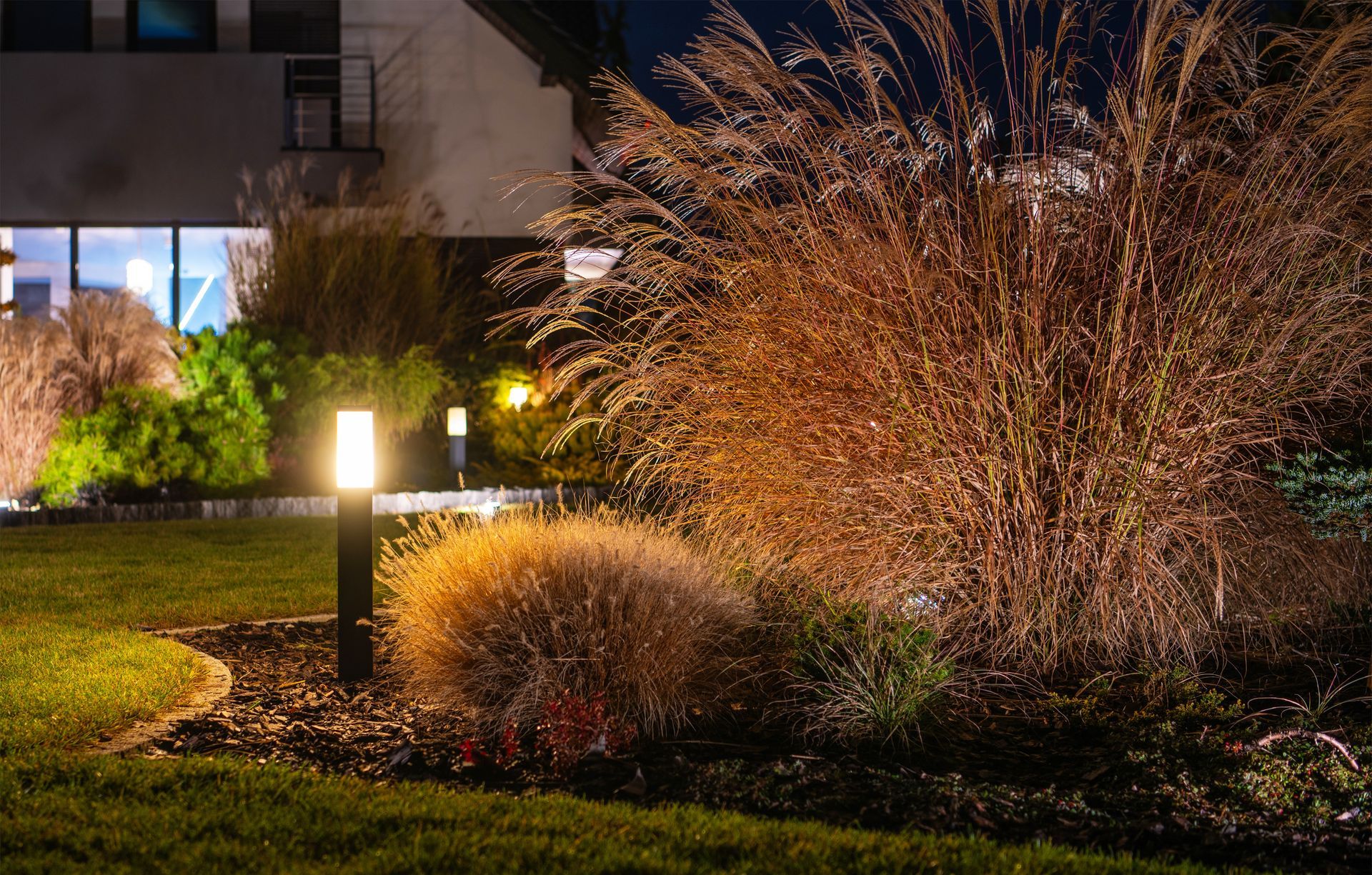
Outdoor Lighting That Extends Usable Hours
Landscape Lighting Installation in Sherwood for properties with dark walkways, patios that become unusable after sunset, and landscape features that disappear once daylight fades
Walkways that lack lighting create tripping hazards after dark, and outdoor living spaces that depend solely on porch lights leave most of the yard in shadow, which limits how and when you use the property. TH3 Electric installs landscape lighting in Sherwood for homeowners who want to illuminate pathways, highlight architectural or landscape features, and extend the usability of outdoor spaces beyond daylight hours. The Pacific Northwest's extended periods of low light during fall and winter make outdoor lighting particularly valuable for maintaining visibility and safety when arriving home after dark or using outdoor areas during evening hours.
Landscape lighting installation involves running low-voltage wiring from a transformer to individual light fixtures positioned along pathways, around patios, and near trees or garden features that benefit from uplighting or accent lighting. Fixtures must be rated for outdoor use and positioned to direct light where it's needed without creating glare that diminishes visibility or intrudes on neighboring properties.
Request a custom lighting plan to identify which areas of your property will benefit most from added illumination.
What Changes After Outdoor Lighting Is Installed
Installation begins with mapping light placement based on which areas need visibility for safety, which features you want to emphasize, and where wiring can run without interfering with landscaping or irrigation systems. Transformers step down standard household voltage to 12 or 24 volts, which reduces shock risk and allows for flexible fixture placement without the constraints of high-voltage wiring, and fixtures connect to the transformer using cable buried a few inches below ground or run through conduit in areas where protection is necessary.
Once the system is active, pathways remain visible from the street to the front door, steps and grade changes are clearly lit to prevent missteps, and landscape features such as trees, water elements, or architectural details gain visual prominence after sunset. LED fixtures provide consistent color temperature and light output while consuming minimal electricity, and timers or photocell controls automatically adjust lighting based on ambient light levels, which eliminates the need for manual operation.
Landscape lighting systems can be expanded over time as landscaping matures or as additional areas of the property are developed, and fixtures are available in a range of styles to match the home's exterior design. Proper placement avoids light pollution by directing output downward or toward specific features rather than allowing it to spread into unintended areas, which maintains the system's effectiveness without creating glare or disturbing neighbors.
Questions Before Starting Your Project
Outdoor lighting installations depend on the property layout, existing landscaping, and how the space is used after dark.
What's the difference between low-voltage and line-voltage landscape lighting?
Low-voltage systems operate at 12 or 24 volts and use a transformer to step down household voltage, which reduces installation complexity and shock risk, while line-voltage systems operate at 120 volts and require burial depth and conduit similar to indoor wiring, which increases cost but supports higher-wattage fixtures.
How do electricians avoid damaging irrigation systems during installation?
Wiring routes are planned to avoid crossing irrigation lines, and when crossings are unavoidable, cable is run through conduit at a depth that prevents contact with sprinkler lines, which protects both systems from damage during operation or future maintenance.
When should landscape lighting be installed relative to other outdoor projects?
Lighting is typically installed after hardscaping and major landscaping are complete, which allows for accurate fixture placement and prevents wiring from being disturbed during grading or planting, though rough wiring can be planned earlier if the landscape design is finalized.
What fixtures hold up best in Sherwood's wet climate?
Outdoor-rated fixtures with sealed housings and corrosion-resistant materials such as brass or powder-coated aluminum perform reliably in the Portland metro area's frequent rain and high humidity, which prevents moisture intrusion and extends fixture life compared to less durable options.
How does lighting design balance aesthetics and functionality?
Effective landscape lighting layers path lighting for safety, accent lighting to highlight features, and ambient lighting to create a welcoming environment, with each layer serving a distinct purpose while contributing to the overall visual effect.
TH3 Electric designs landscape lighting systems that balance safety, aesthetics, and energy efficiency. Reach out to discuss a lighting plan tailored to your property's layout and how you use outdoor spaces year-round.